
Why the cluster matters
Ask where casual sneakers can be made at volume, and the map narrows quickly. The Jinjiang and Quanzhou area of Fujian province is one of China's major footwear manufacturing belts, specialized in sports and casual shoes at scale. What serves a buyer is not one large factory but the density around the factories: uppers, outsoles, midsoles, molds, packaging and accessories are all supplied within the same area, so a material that runs short on Monday is back on the line within days, and a counter-sample does not wait on a courier from another province.
Density also decides who is available to build. Because the cluster has produced sports and casual footwear for decades, it holds factories specialized by construction rather than generalists: lines that run cemented platforms all season, vulcanized canvas lines, sandal lines, kids' lines. Matching a program to the right specialist is most of what separates a clean first run from a slow one, and it is the first thing the desk does with a brief.
For a program, that density shows up in three practical places. Sampling loops are shorter, because the material market and the mold shops sit near the lines. Substitutions are discussable, because a trim that is out of stock has neighbors selling a replacement. And small programs are normal, because a cluster that runs national volume also has lines that absorb short runs between the long ones. None of it removes the need for a written spec - it makes the written spec faster to execute.
The anchor partner, as stated
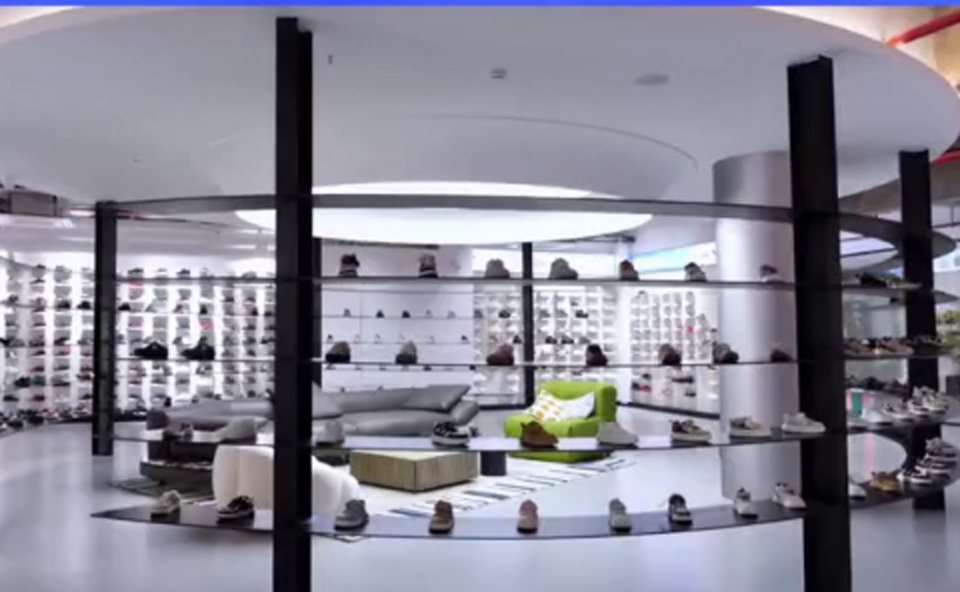
The desk's anchor partner is a footwear export company rooted in Jinjiang. Its own materials state more than two decades of footwear export, an integrated supply chain, and shipments to more than twenty countries across Europe, the Americas and the Middle East. They also state the operational facts that carry the stock route: a spot warehouse of over 1,000 square meters stocked with finished footwear, shoe materials and accessories, confirmed orders picked immediately, large orders executed and small orders flexibly customized.
Those statements are quoted as supplier claims, not audited facts. The phrasing the desk stands behind is qualitative: a Jinjiang partner with more than two decades of footwear export behind it. Anything numeric that matters to a program - quantities, dispatch dates, packing - is confirmed in writing before you commit, which is the standard this site works to everywhere, on both routes.
Matching the program to the factory
A brief that names a category can be routed quickly, because the cluster holds a specialist for each build. The table shows how the desk reads a program: the construction the category implies, the kind of line it belongs on, and what gets checked first. It is routing logic, not a promise about a specific line; line-level detail for your program is confirmed on the spec sheet.
| Program | Typical construction | Factory fit | First checks |
|---|---|---|---|
| Cushioned everyday runners | Cemented: stitched upper lasted on a foam midsole, rubber outsole glued and pressed | A running platform line | Spec sheet, counter-sample, bond samples |
| Court and retro low tops | Cemented, slim profiles in PU leather or suede | A court and casual line | Panel stitching, shape against the approved sample |
| Canvas court shoes | Vulcanized: canvas upper with rubber foxing, oven-cured | A vulcanized line | Foxing bond, cure practice on request |
| Chunky lifestyle builds | Cemented, layered foam midsole | A line used to layered soles | Sole bonding, lift alignment |
| Two-strap sandals | EVA or PU footbed with cemented straps | A sandal line | Strap pull, footbed pairing |
| Kids' sneakers | Cemented, lighter builds on smaller lasts | A kids' line | Size conformity, trim checks where rules require them |
The routing matters in both directions. It sends a program to a line that already runs the build, and it keeps a canvas court shoe away from a running platform that would treat vulcanizing as an experiment. How each construction is built, stage by stage, is described in the production process.
What the desk adds to the cluster
The cluster supplies capacity; a buyer still needs translation. The desk takes your brief and turns it into a document a factory can quote against, routes it to the partner whose line fits the construction, manages sampling and approvals, and stays on inspection and packing down to the carton marking before anything ships. One contact, in writing, from brief to dispatch. On the OEM route the sequence and its timing ranges are in the OEM guide; the checks before dispatch are in quality control.
Stock lives in the same cluster
The anchor partner's spot warehouse sits in the same area, stocked with finished current-season sneakers and sandals in core colors, EU 36-45 on most models. That is what makes the stock route fast: no tooling, no production queue, orders picked as soon as a program is confirmed and typically dispatched within days. For buyers structuring a first order from that warehouse, the stock route explains how the list is presented, and the lot buying guide shows how to spread a first budget across styles.
Start with a brief, not a search
If your range plan names categories, sizes and a clock, the first reply can name the route, the likely construction and the questions still open. The sequence end to end is walked through in how to source sneakers from China, and OEM vs ODM footwear helps you decide how much design control you want before the brief goes out. Send what you have with the request form.