
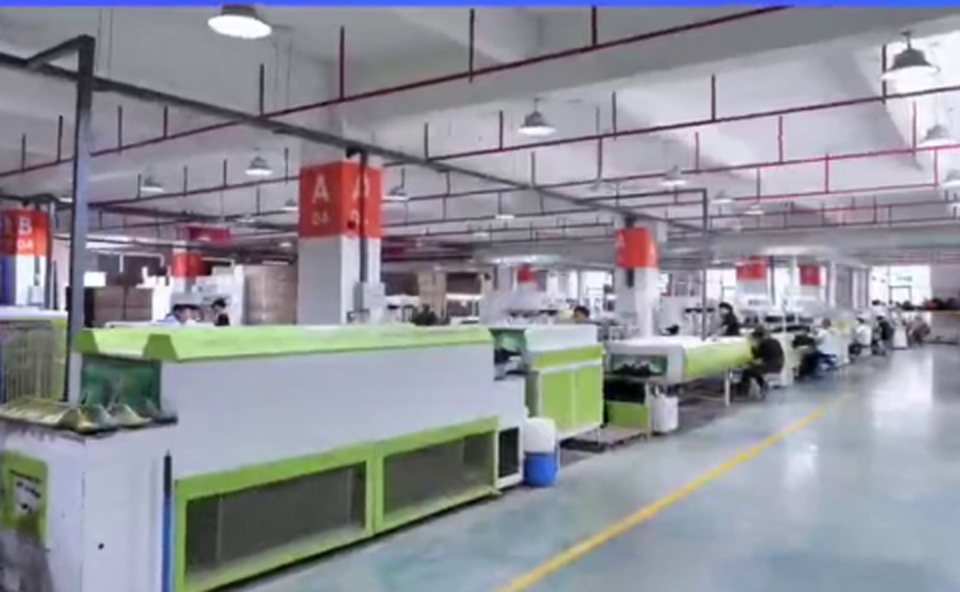
The build, stage by stage
Every casual sneaker on either route passes through the same sequence of stages. What changes between models is the material at each stage and the time each stage takes.
Cutting. Upper panels are cut from the specified materials - engineered mesh, knit, PU leather, split leather or suede - to the pattern for the size being run. Clean cutting is invisible when done well and expensive when not, which is why patterns and material grades are fixed on the spec sheet before anything is cut.
Stitching. Panels are closed and reinforced, and the upper takes its shape. Stitch density, thread and seam placement follow the spec; this is the stage where most visible quality complaints begin, so it is checked on the line while work proceeds.
Lasting. The stitched upper is pulled over a last - the foot-shaped form that sets fit - and secured, which fixes the shape of the toe box and the heel counter. Fit feedback from sample trials is applied here, which is why the counter-sample, not the development sample, is the reference that gets sealed.
Sole work. Two constructions dominate casual sneakers. In cemented construction, the lasted upper is bonded to a foam or EVA midsole and the outsole is glued and pressed. In vulcanized construction, a canvas upper meets a rubber foxing and the assembly is oven-cured. The choice decides which line a program runs on and part of its lead time; the trade-offs are compared in vulcanized vs cemented construction.
Finishing. De-linting and cleaning, eyelet setting and lacing, insoles in, pairs matched left to right. Small stages, but they are where a program looks finished or rushed on the shelf.
Checking and packing. Visual checks, bond strength sampling and size conformity, then shoe trees or tissue, the box and the carton - 12 pairs per carton on stock, and whatever the spec sheet sets for an OEM program. Cartons are marked with model, color, size run, carton size and piece count before sealing.
The same stages, from the buyer's side
| Stage | What happens | What you see |
|---|---|---|
| Cutting | Upper panels cut from mesh, knit, PU or suede to the pattern | Material names and grades on the spec sheet |
| Stitching | Panels closed and reinforced to the stitch spec | Counter-sample, photos on request |
| Lasting | Upper shaped over the last; fit fixed | Fit feedback applied to the counter-sample |
| Sole work | Cemented: midsole and outsole glued and pressed. Vulcanized: canvas and foxing oven-cured | Construction named on the spec sheet |
| Finishing | Cleaning, eyelets, lacing, pairing | Finished pair against the approved sample |
| Checking | Visual checks, bond samples, size conformity | Inspection plan agreed in writing |
| Packing | Tissue, boxes, marked cartons | Carton marking spec before sealing |
Cemented or vulcanized
Choose cemented when the design needs cushioning or a layered platform: foam midsoles, chunky builds, everyday runners. Choose vulcanized when the design is a canvas court shoe and the sole should read as a clean rubber band. The decision is not only visual - it sets the factory fit, the sampling path and part of the lead time, so the desk proposes a construction with the first quote instead of leaving it to the sample stage. How the two builds differ, part by part, is in the construction comparison.
From spec to bulk
The OEM sequence runs through two documents and two samples between the idea and the carton. The spec sheet states materials, construction, size grid, packing and labels. The development sample is the first make, used to judge shape, materials and fit. The counter-sample applies what the development sample got wrong and, once approved, is sealed as the reference bulk is checked against. Bulk then runs under the agreed inspection plan until the pre-shipment check. Development and counter-samples typically take about 15-30 days together; bulk typically about 45-60 days after approval, longer before peak season - reference ranges, confirmed in writing for each program. The route in full is in the OEM guide; the sampling stages are in the sampling process.
- Spec sheet. Materials, construction, size grid, packing, labels - what goes in writing is in the spec sheet template.
- Development sample. First make; shape, materials and fit are judged against it.
- Counter-sample. Corrections applied; approved and sealed as the production reference.
- Bulk. Production against the sealed sample; milestones reported in writing.
- Pre-shipment check. Inspection against the plan in quality control, then packing and dispatch.
Where time is won and lost
Programs rarely lose time on the line; they lose it in the decisions around it. Materials still open when sampling starts cost a sample cycle. Mold questions left unanswered - a new outsole or an existing platform - can add weeks, and the trade-offs are in tooling and molds. Approvals accumulate too: a buyer who turns sample feedback around in two days keeps the reference ranges honest, and one who takes two weeks does not. The desk's job is to keep those loops short and every decision written down, so the calendar survives contact with reality.
After the last stage
Once cartons are sealed and marked, the program moves to dispatch planning and, for most programs, a final inspection against the agreed plan. What the checks cover and how results reach you is the subject of quality control. If you are planning a program and want this sequence mapped against your dates, send the outline with the request form and the first reply will name the stages that need decisions first.