
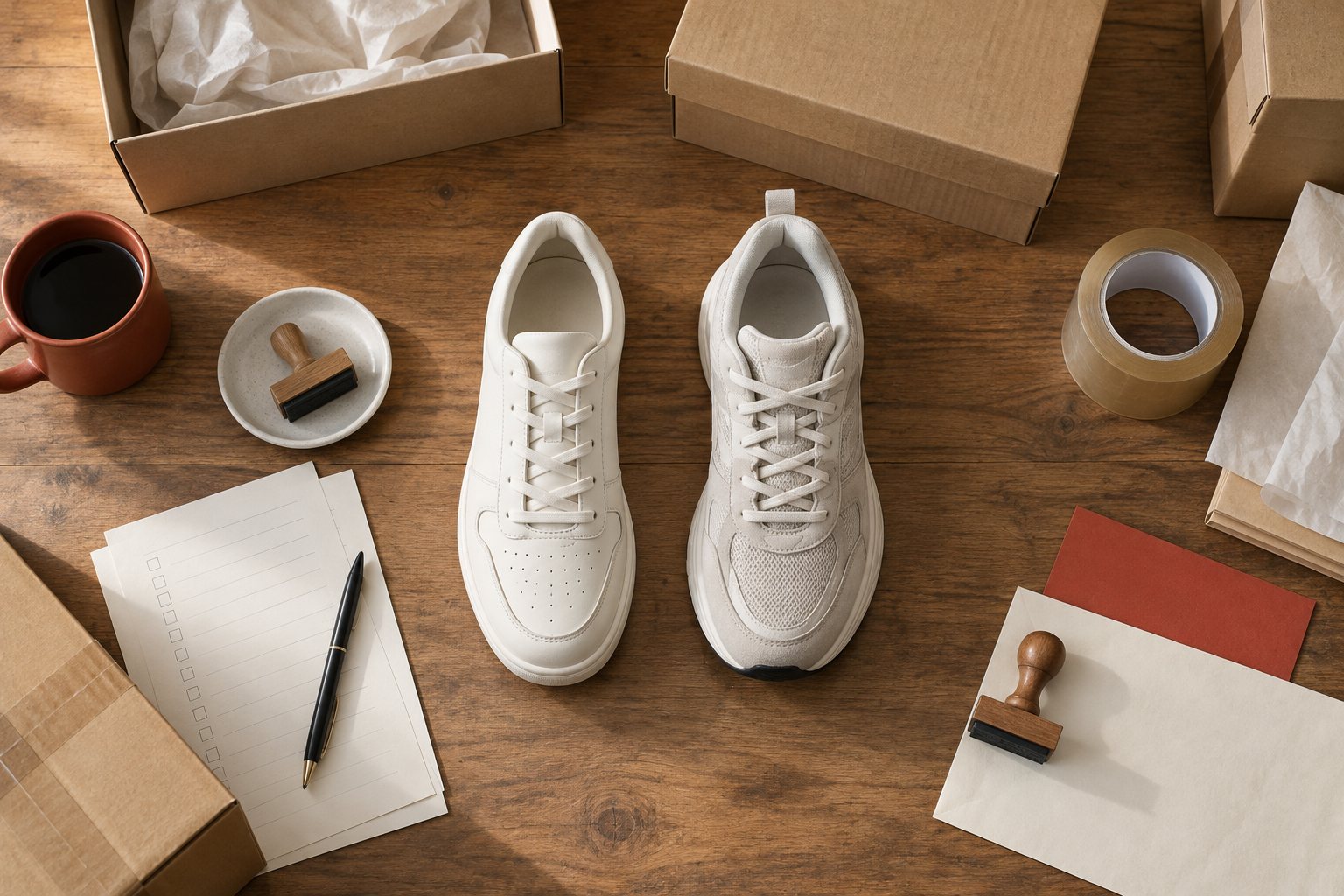
Why the distinction is worth a page
Buyers use "sneaker" and "athletic shoe" interchangeably, and most of the time nobody is harmed. In sourcing, the confusion costs money. A casual sneaker sold as a running shoe generates returns and reviews a range cannot survive; an athletic build specified for a lifestyle channel pays for engineering the channel never uses. The line between the categories is real, it is visible in construction, and it should be decided before a program is quoted - which is why this page exists on a sourcing desk rather than a fashion blog. The desk's scope is deliberate: casual sneakers and sandals, the lifestyle categories, plus OEM builds to spec. Understanding why that scope is drawn where it is requires understanding the line itself.
Four lines that separate the categories
| Dimension | Casual sneakers | Athletic shoes |
|---|---|---|
| Intended use | Everyday wear, styling, standing and walking | A defined sport or training load |
| Cushioning | Comfort underfoot for daily wear, described qualitatively | Engineered to a performance purpose, sport by sport |
| Construction | Cemented lifestyle builds; vulcanized canvas builds | Performance assemblies built around the sport's stresses |
| How it is sold | Look, color, outfit fit | Measured performance claims, tested to the purpose |
Read the table by its last row first, because it drives the rest: an athletic shoe's value proposition is a performance claim, and performance claims have to be backed by testing against the purpose. A casual sneaker's value proposition is how it looks, feels and wears day to day - which is a different promise and a far more honest one for a lifestyle channel to make. The cushioning row follows: the desk describes cushioning qualitatively - comfort underfoot, a cushioned everyday ride - and refuses invented performance numbers, while a genuine athletic program is engineered and tested to its sport. The construction row is the visible tell: most casual sneakers are cemented builds over foam midsoles or vulcanized canvas builds, and that assembly is chosen for cost, look and everyday wear, not for the repeated impact of a sport. The construction families are compared in the construction comparison, and cushioning types in plain words in the cushioning note.
The gray zone, named
Two categories blur the line deliberately, and buyers should name them honestly in their own range. Court-inspired trainers borrow the look of sports footwear for a lifestyle build - flat rubber sole, low profile, panel-built upper - and are casual sneakers however athletic they photograph; the borrowings are set out in the court vs runners comparison. Trail-style sneakers borrow outdoor vocabulary - grip outsoles, toe guards, rugged uppers - on a casual platform, and the desk describes them exactly that way: rugged everyday shoes with outdoor manners, not technical trail equipment. The honest pattern is consistent: the closer a style sits to the athletic side of the line, the more carefully its product copy must avoid performance claims it was never built or tested to carry.
The same honesty cuts the other way. Buyers sometimes ask the desk to quote an athletic build without the testing behind it, and the answer is no: a shoe built for a sport carries obligations - to your customers and to the desk's own descriptions - that casual construction does not satisfy. What the desk can do is route such a brief to a partner already running that category and say plainly what it can and cannot verify in writing.
Why the line matters for range planning
For an importer or brand, the distinction sorts into three practical consequences. Range: casual categories rotate on style cycles and reward core-color depth, while athletic categories rotate on product cycles and reward specification depth - mixing the two logics in one range plan is a common way ranges drift. Copy and returns: a casual sneaker described honestly as an everyday shoe returns less than one implied to perform. And sourcing: the desk's stock program is built from casual categories exactly because they can be quoted, checked and labeled without performance test regimes - the range planning logic is in the range planning note, and the broader casual-vs-sneaker vocabulary in the casual shoes comparison.
How the desk quotes each side
Every brief the desk takes runs through the same five gates, and the casual-versus-athletic line is the first of them.
- State the use. Everyday wear or defined sport - it decides whether the brief stays with the desk.
- Name the category. A family from the category pages, described generically, never by brand.
- Fix the construction. Cemented or vulcanized, upper materials, sole build - the spec sheet vocabulary.
- Keep claims level. Copy written to what the build is: everyday comfort, grip, materials - no performance numbers.
- Confirm in writing. Spec, labeling, packing and dates on the program sheet before bulk.
Step four deserves its emphasis. Most category confusion becomes a product claim the moment a listing says "performance" about a shoe nobody tested. The desk's spec sheets describe materials and construction in the vocabulary of this page precisely so that downstream copy has something accurate to quote from.
Classification follows the product, not the name. A lifestyle shoe and a performance shoe both land in HTS chapter 64, and which heading applies is a customs broker question - the desk's role is to make sure the spec sheet describes the shoe accurately so the broker can do theirs. If your program needs a defined athletic build, the desk will say so plainly and point the brief at the right kind of partner; the categories the desk carries are set out across the category pages, from retro runners to chunky builds and beyond. Bring the intended use, not just the look, when you write to the request form - it is the single fact that keeps a program on the honest side of the line.