
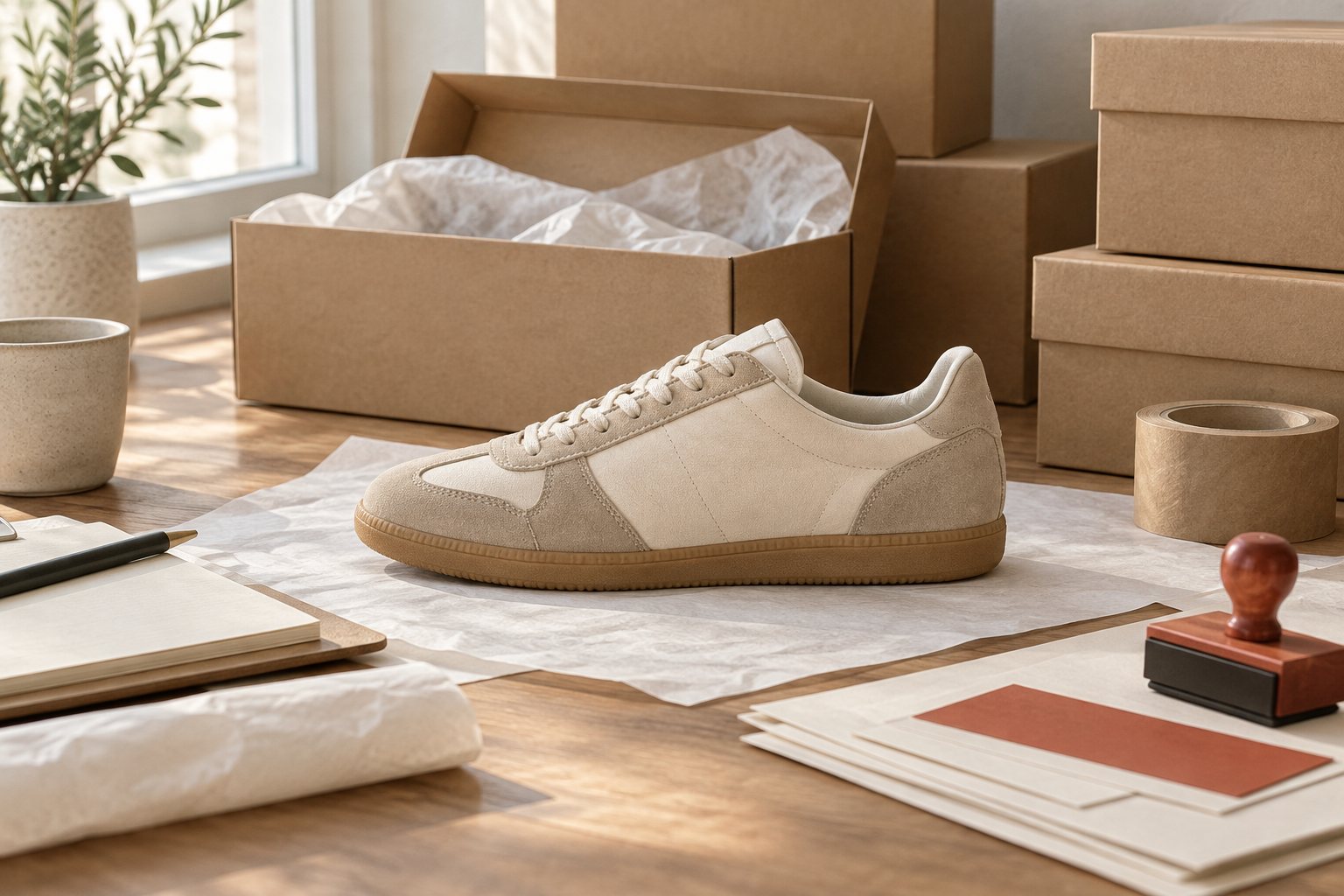
What makes a retro runner
The retro runner is a silhouette, and it can be described without borrowing anyone's trademark: a lean, low-profile upper that sits close to the foot, a slim foam midsole without exaggerated sculpting, a flat rubber outsole, and a panel layout that breaks the upper into a mudguard, a side panel and a heel piece. Suede usually carries the overlays and mesh or nylon the base, so the shoe reads textured rather than smooth. Toe shapes are pointed rather than round, the collar sits low, and the whole shoe looks narrower than a modern cushioned runner from any angle. That combination - slim proportions, panel splits, mixed materials - is the entire style, and it predates every current brand by decades, which is why generic versions of it are a legitimate, manufacturable category.
The desk's line on this is absolute and worth restating on this page of all pages: the desk coordinates original generic designs only. A generic retro runner is your panel layout, your color split and your labels on a proven slim platform. A design that copies a protected silhouette, logo or distinctive detail is never photographed, listed, quoted or shipped - not because the style is off-limits, but because copying is. Buyers who arrive with a photo of a branded shoe are asked to point at the generic features they want instead: the slim sole, the suede overlays, the color split. Those can be specified, drawn and owned.
How the style is specified
A retro runner lives or dies on four decisions, all of them set on the spec sheet rather than left to the factory's default. They are worth naming because together they separate a clean generic build from an accidental copy.
| Element | Typical generic spec | Set where |
|---|---|---|
| Sole unit | Slim foam midsole, flat rubber outsole, low side wall | Spec sheet per program |
| Upper layout | Mudguard, side panel and heel overlay in suede over a mesh or nylon base | Spec sheet per program |
| Fit | Standard-width lasts, grading across EU 36-45 or a tighter band | Spec sheet per program |
| Colors | Two- or three-color panel splits; core first, seasonal second | OEM color plan |
Each of those rows is a place where a buyer can be original. Change the overlay proportion and the shoe reads differently; shift the color split away from any famous combination and the design is unmistakably yours; add a heel patch in your own shape and the silhouette is no longer anyone else's. The material choices - suede grades, mesh weights - are covered in the materials guide, and the panel logic in more detail in the retro runner explainer.
Why this category runs on OEM
The current stock list is built around what a warehouse can move in volume: cushioned everyday runners, court-inspired trainers, leather casuals, chunky builds and a trail-style runner, in core colors at EU 36-45 (some runs 36-41). A slim retro runner is a more specific buy - the buyer usually wants a particular panel layout and a particular color split, and warehouse stock that guessed wrong sits. That is why the sample lots on the stock page do not include a retro runner, and why the honest answer to "do you have this style in stock" is: sometimes, on the live list, confirmed at RFQ - but the dependable route for this category is OEM.
OEM suits the style for a second reason: platform reuse. The slim sole and the lean last already exist in the partner factories' current ranges, so a program can start as a new upper on an existing platform instead of paying for full tooling. Development and counter-samples typically run about 15-30 days, bulk about 45-60 days after approval, longer before peak season - reference ranges, confirmed in writing per program. Minimums are set per style and tooling, and reuse keeps them manageable. The numbers are laid out in MOQ and lead time.
From sample to bulk
The sampling sequence for a retro runner rewards patience at one specific moment: the counter-sample. The development sample proves the concept - panel layout, material mix, proportions on the last. The counter-sample proves the corrections, and this is where a buyer should spend their attention, because the details that make the style read as designed rather than assembled live in small changes: the height of the mudguard, the margin between overlay and stitching, the color match between suede lots. Approve the counter-sample only when those details are right, because bulk copies the approved shoe, not the conversation around it. After that the clock is conventional: bulk production in about 45-60 days, inspection against the approved reference, packing to the program sheet, and a label check against the destination market's rules before cartons seal.
Who buys this category
Three buyers recur. New brands launching with a retro runner as their first silhouette, because the style photographs well, fits a wide age range and reads as design rather than as sport. Established ranges adding a slim shoe as a counterweight to chunky builds. And wholesale or marketplace sellers who saw the style move and want a generic version with their own label - the private label path described on the private label page. All three start the same way: a brief that names the generic features, a spec sheet, a counter-sample, then bulk. Send yours through the request form with the panel layout and colors you have in mind, and the first reply will name the platform, the sampling plan and the questions still open.
One warning worth its own paragraph: this category attracts more IPR trouble than any other in casual footwear, because buyers keep asking for "the real thing, but generic". The desk's process protects both sides - describe the features, not the brand, and the program that comes back is one customs can never question. The reasoning is set out in the IPR risk note.