
More than a logo on a tongue
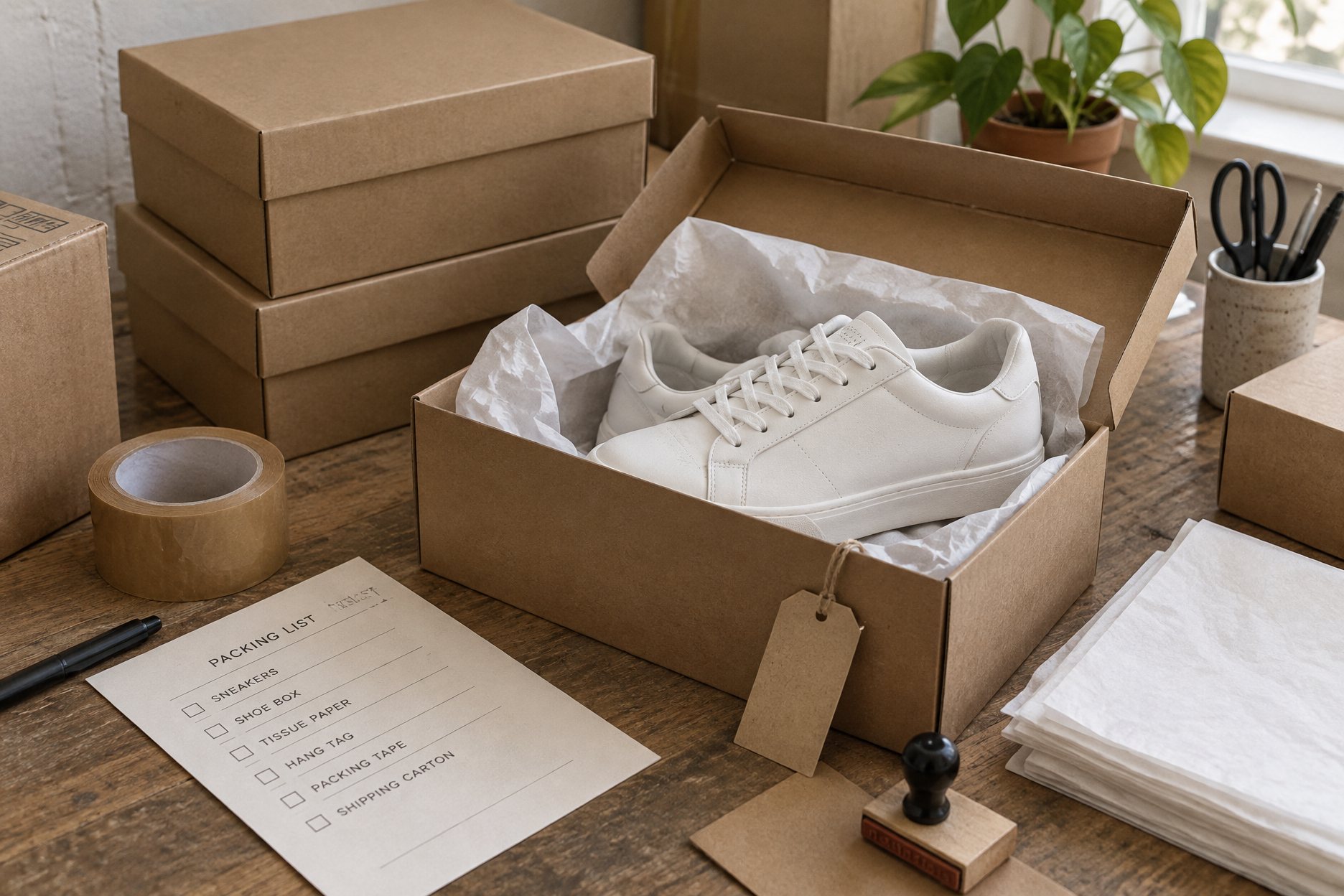
Private label, done properly, is not a logo dropped onto a finished shoe. It is a set of decisions spread across the product and its packaging - label, footbed, tag, box, carton - specified while the spec sheet is being written, so every piece arrives together and looks like it belongs to the same brand. A buyer who treats branding as an afterthought ends up with neutral shoes in neutral boxes and a brand that exists only as an inserted card. This page sets out the elements, who supplies what, and the two points where a private label program can start.
The five elements buyers brand
Five touchpoints carry a footwear brand through a program. Each is simple on its own; the value is in specifying all five at once.
- Woven labels. The label on the tongue or collar carries the brand name in weave. Artwork, size, fold and position are specified on the sheet and checked on the sample.
- Printed sockliners. The footbed print is the touch the wearer sees every time the shoe comes off. Print file, position and material come off the spec sheet.
- Hang tags. Card, artwork, attachment and required text - tags also carry the labeling content your market requires.
- Custom boxes. Box artwork, board and print turn the carton into a brand moment; the box spec sits in the packing section of the sheet.
- Carton marking. The shipping carton carries model, color, size run, carton size and pieces - marked to your format where the program needs it.
| Element | What it involves | Where it is settled |
|---|---|---|
| Woven label | Artwork, weave, size, fold, position | Spec sheet; checked on sample |
| Printed sockliner | Print file, position, footbed material | Spec sheet; checked on sample |
| Hang tag | Card, artwork, attachment, required text | Packing and label section |
| Custom box | Box art, board, print, dimensions per shoe | Packing spec |
| Carton marking | Model, color, size run, carton size, pieces | Program sheet, before sealing |
What you supply, what the factory supplies
The division is clean. You own the brand: names, artwork files, the label and packaging content your market requires, and the approvals at each sample round. The factory owns execution: sourcing label and box materials, printing to the artwork, applying at the line, and packing to the spec. What the desk owns is the middle - translating artwork into factory instructions, checking that sample branding matches the file, and making sure the branded version is the version that ships. Neither side needs to do the other's job; the program needs both done on time.
- You supply
- Brand names and artwork files, the label content your market requires, packaging decisions, and approvals at each sample round.
- The factory supplies
- Label and box materials, printing and application at the line, packing per the approved spec, carton marking to the program sheet.
- The desk coordinates
- Spec translation, sample checks against artwork, and written confirmation of every branding figure before bulk starts.
When branding is decided
Timing matters more than budget in private label. The elements are cheap to settle at spec-sheet stage and expensive to retrofit: a label or box added after the counter-sample means another sampling round, and a marking format raised after sealing means repacking. The desk's standard sequence folds branding into the rounds that already exist - label and sockliner checked on the development sample, tags and boxes on the counter-sample, carton marking written into the program sheet before picking or sealing. Nothing extra is invented; the branding simply rides the schedule the program already runs on.
Two starting points for private label
Private label starts at different points depending on where the buyer stands. On OEM from the start, branding is written into the spec sheet before the first sample, so the development sample already shows your label, your sockliner print and your box. This is the clean route for a brand launching a range. On converting a proven stock style, a style that has sold through on the stock route moves to OEM with your labels and packaging - the demand risk is already spent, and the branding arrives on a shoe your numbers already believe in. That is the common path for boutiques and online sellers whose first season proved a silhouette. Both routes are described on the OEM page; the stock side is on the stock route.
Labels carry required text too
Branded labels are also compliance labels. For the United States, footwear labels must disclose the material of the upper, lining and outer sole, and the country of origin; other markets carry their own requirements. The desk coordinates label execution to your artwork and your stated requirements, but the content and its accuracy are the buyer's compliance responsibility - confirm them with your adviser. The framework is on the compliance page, with the US rules in detail in US shoe labeling rules.
The trademark line, plainly
Two sentences, no more. First: register your mark in your market - the desk does not advise on trademark registration and does not check clearance for you. Second: the desk coordinates original, generic designs only, and does not sample, quote or ship styles that copy a third-party brand, whatever label is proposed for them. Both sentences exist to keep a branding program from turning into a legal program. For branding structure beyond this page, see private label sneakers: beyond the logo.
Starting a branded program
Send the artwork status with the brief: what exists as files, what is decided, what is still a placeholder. A program can start with finished artwork or with a decision list - the desk will tell you which pieces the factory needs before sampling and which can wait until the counter-sample. Put the route, styles and quantity on the request form, and the reply comes back in writing with the branding steps slotted into the sampling plan. For packaging detail, see sneaker packaging design.